Global Food Supply Under Fire: How Regional Conflicts Disrupt the Fresh Produce Chain
Explore how regional wars and geopolitical tensions disrupt global food supply chains, increase freight costs, and impact fresh produce importers and exporters worldwide.
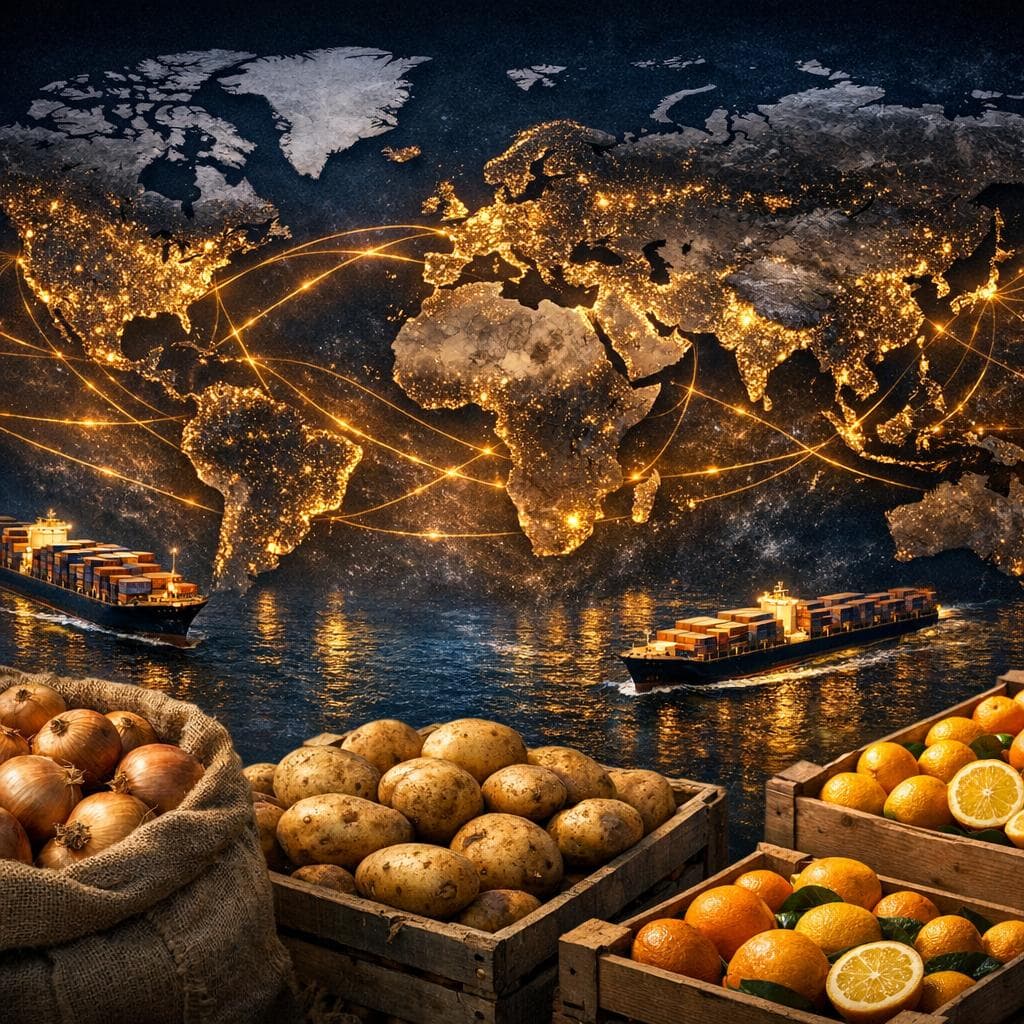
Global Food Supply Under Fire: How Regional Conflicts Disrupt the Fresh Produce Chain
Regional conflicts are increasingly disrupting the global food supply chain, creating significant uncertainty for importers, distributors, and food retailers worldwide. From port closures to rising freight costs and longer shipping routes, geopolitical tensions now play a major role in the international fresh produce export industry.
Products such as potatoes, onions, and citrus fruits depend on efficient logistics networks to move quickly from farms to international markets. When regional conflicts affect major trade corridors, the consequences ripple across the entire food supply chain, affecting pricing, supply stability, and food security.
For global buyers and importers, understanding these agricultural trade risks has become essential for maintaining stable supply partnerships.
Redrawing Logistics Routes and Surging Freight Costs
Logistics is often the first casualty of geopolitical instability. Conflicts near strategic maritime corridors force shipping companies to reroute vessels, dramatically altering global food supply chain logistics.
For example, tensions around the Red Sea and key maritime passages have recently forced cargo ships to take significantly longer routes. These changes directly affect the fresh produce export sector, where speed and reliability are critical.
Key impacts include:
Extended Transit Times
Fresh produce is highly perishable. Products like onions, potatoes, and citrus require efficient transportation to maintain quality. Longer transit times increase the risk of spoilage and reduce shelf life upon arrival.
Rising Freight Costs
Alternative shipping routes mean higher fuel consumption and longer voyage durations. Additionally, vessels operating near conflict zones face increased war-risk insurance premiums, which drive container freight rates significantly higher.
As a result, importers experience a growing logistics crisis in global food distribution.
Disruption of Agricultural Inputs and Production
Regional wars impact more than shipping lanes—they disrupt agricultural production itself.
Conflict zones often experience:
- farmland damage
- labor shortages
- interrupted harvest cycles
These disruptions reduce available supply in the global market. At the same time, wars often affect energy and fertilizer supply chains, which are critical for modern agriculture.
Because fertilizers and fuel are globally traded commodities, instability in one region can increase production costs worldwide, affecting growers even thousands of miles away from the conflict.
This creates additional agricultural trade risks for importers and food distributors.
Price Volatility and Global Food Inflation
When logistics disruptions combine with declining agricultural output, the result is global food price volatility.
Importers and wholesalers face a difficult challenge: maintaining price stability while transportation costs fluctuate dramatically.
Even when EXW (Ex Works) farm prices remain relatively stable, increases in freight, insurance, and logistics services significantly raise CIF (Cost, Insurance, and Freight) prices.
Ultimately, these additional costs are passed along the supply chain, contributing to food inflation in consumer markets.
For businesses operating in the fresh produce export sector, managing these risks requires strong supplier relationships and flexible logistics planning.
How Importers Can Reduce Supply Chain Risks
In today’s volatile geopolitical environment, importers must adopt strategies to protect their supply networks.
Some key approaches include:
- diversifying supplier regions
- working with exporters who have flexible logistics capabilities
- securing long-term supply agreements
- choosing partners with strong international shipping experience
Reliable exporters can help buyers navigate disruptions by quickly adapting logistics routes and maintaining consistent product quality.
Ensuring Reliable Fresh Produce Supply During Global Crises
In times of global uncertainty, the most valuable partners in the food supply chain are those who combine agricultural expertise with logistics flexibility.
A resilient exporter must be able to:
- organize alternative logistics routes (sea, land, or multimodal)
- maintain consistent product quality and grading standards
- honor supply commitments despite market volatility
- provide market intelligence and logistics guidance to partners
At Kulims Global Trade Core Dış Ticaret A.Ş., we support international partners with reliable sourcing and export solutions for fresh onions, potatoes, citrus, and other fresh produce.
Our goal is not only to supply products but also to help buyers secure stable food supply even during periods of global logistics disruption.
If you are looking for a dependable fresh produce export partner, we are ready to support your sourcing strategy.
Contact us today to explore stable and flexible supply solutions tailored to your market.